
Speech & Debate Events and Definitions
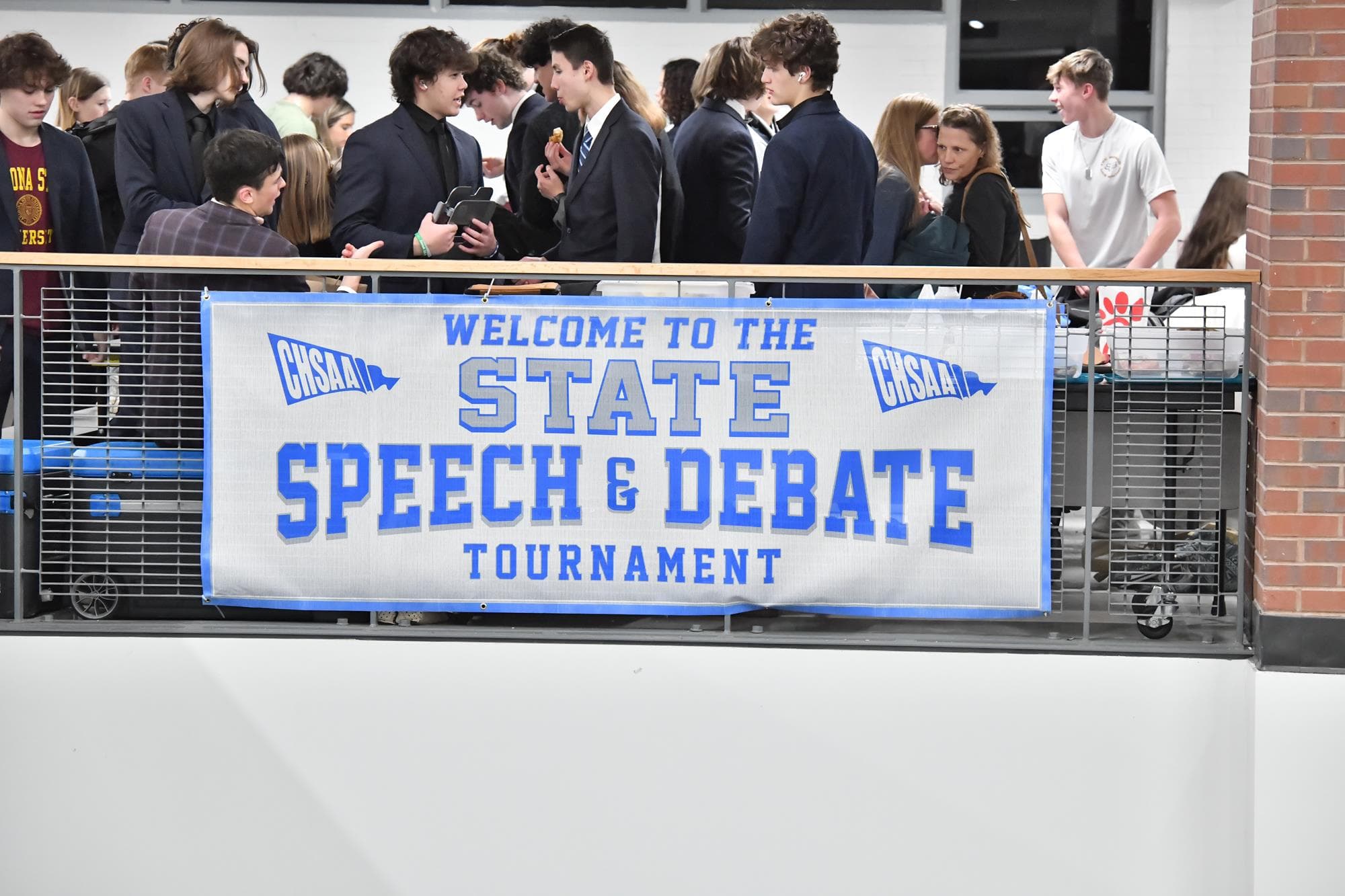
Throughout the Speech & Debate State Championships, there are a variety of different events and topics contested. Below is a look at what some of the events are, what they will entail and descriptions of what they are:
Interpretation: Drama, Humor, Poetry and Program Oral will be different interpretation events offered at the state championships. An interpretation of something is meant for the competitor to be able to try and convey something that has previously been written or published. It may not be work written by the performer and must be publicly available. Once a piece is selected, the performer has no more than 10 minutes to perform.
- For the Dramatic Interpretation, a competitor is to act out a dramatic scene and can portray more than one character, but is not allowed to use any props.
- Humor Interpretation is similar, but instead of trying to be dramatic you use facial expressions, body language, etc. to try and create a humorous piece.
- In the Poetry Interpretation, the performer tries to mimic the original emotions of the poem
- Finally, Program Oral is a mix of everything and tests the performer’s ability to interpret multiple types of literature.
- There is also a Duo Interpretation section in which each performer must portray multiple characters and may choose between the options of the solo interpretation styles.
Lincoln-Douglas Debate: In a topic chosen by the National Speech and Debate Association two competitors will go one-on-one in a debate where one argues the affirmative of the argument and one argues the negative. Competitors submit evidence to support their cases. While the affirmative argument must stay per the guidelines, the competitor arguing the negative is allowed to argue whatever they want, as long as it does not support the affirmative.
Public Forum Debate: This is a two-on-two competition in which one side argues the pro and one argues the con of the chosen topic by the NSDA. The public forum debate does have a section called a cross fire round in which each team takes the floor and they can answer questions at will, really creating a free-for-all environment.
Congressional Debate: In the congressional debate, a caucus of 12-to-18 students creates a mock congress in which they function like the actual congress in Washington D.C. In the mock congress, competitors create: legislation, amendments, resolutions and even elect a presiding officer over the house. They are judged on their ability to get things passed and to convince their constituents to side with them.
Extemporaneous Speaking: Extemporaneous means do so essentially without preparation. When a student is preparing to compete in extemporaneous speaking, they choose a topic that is centered around things such as: domestic and foreign affairs and foreign policy. Each topic is within two divisions, either international, or national. At the 3A level, the competitor chooses which topic they want to speak on and must remain in that division for the remainder of the competition. In order to choose a topic a student must report to a preparation room, where they will draw three topics and choose one of the drawn ones. They will then have 30 minutes to prepare a speech on that topic, using things like: published books, magazines, journals, etc. All materials must have been checked by a judge, because students cannot consult with outside sources, or use prior notes in the competition.
Informative Speaking: In informative speeches, competitors create a speech that is 10 minutes in length that is aimed to inform the audience about a topic of their choosing, rather than advocate for one side over the other.
Original Oratory: Students deliver a self-written, 10 minute speech on a topic of their choosing. Competitors craft an argument using evidence, logic, and emotional appeals. Topics range widely, and can be informative or persuasive in nature. The speech is delivered from memory.
One-on-One Value Debate: Only contested in 3A, competitors will draw an argument 30 minutes prior to the competition, and then one will argue the affirmative and one will argue the negative. They are taken into a preparation room in which they are allowed to research their topic. Unlike some of the other debates, they do not have to have the burden of proof. They also must do so without any outside materials. Each competitor is judged based on their argumentation skills
Impromptu Speaking: Only contested in 3A, a competitor chooses between three topics that contain a phrase and a word five minutes before their speech. Each topic is a current event and that student must speak for three-to-five minutes on the topic that they have chosen.
Creative Storytelling: Only contested in 3A, a competitor chooses between three topic outlines and then is given 15 minutes to prepare a creative story based on the outline that they have chosen. Once picked, they are not allowed to use outside sources and are expected to have narration and characterization in their story. Each story must be between three and five minutes.
Cross Examination: Only contested in 5A, teams of two argue against each other, one for the affirmative and one for the negative. The first part of it is constructive speeches in which each team takes turns constructing an argument and then cross examining their opponents argument. If one person on the team speaks, they are not allowed to follow themselves and their teammate must speak their next turn. Each team gets to constructive arguments and two cross examinations before switching to rebuttal speeches in which each team also gets two. Each team can submit evidence from the NSDA topic that they know prior to the match.